 EN/
EN/ Romana
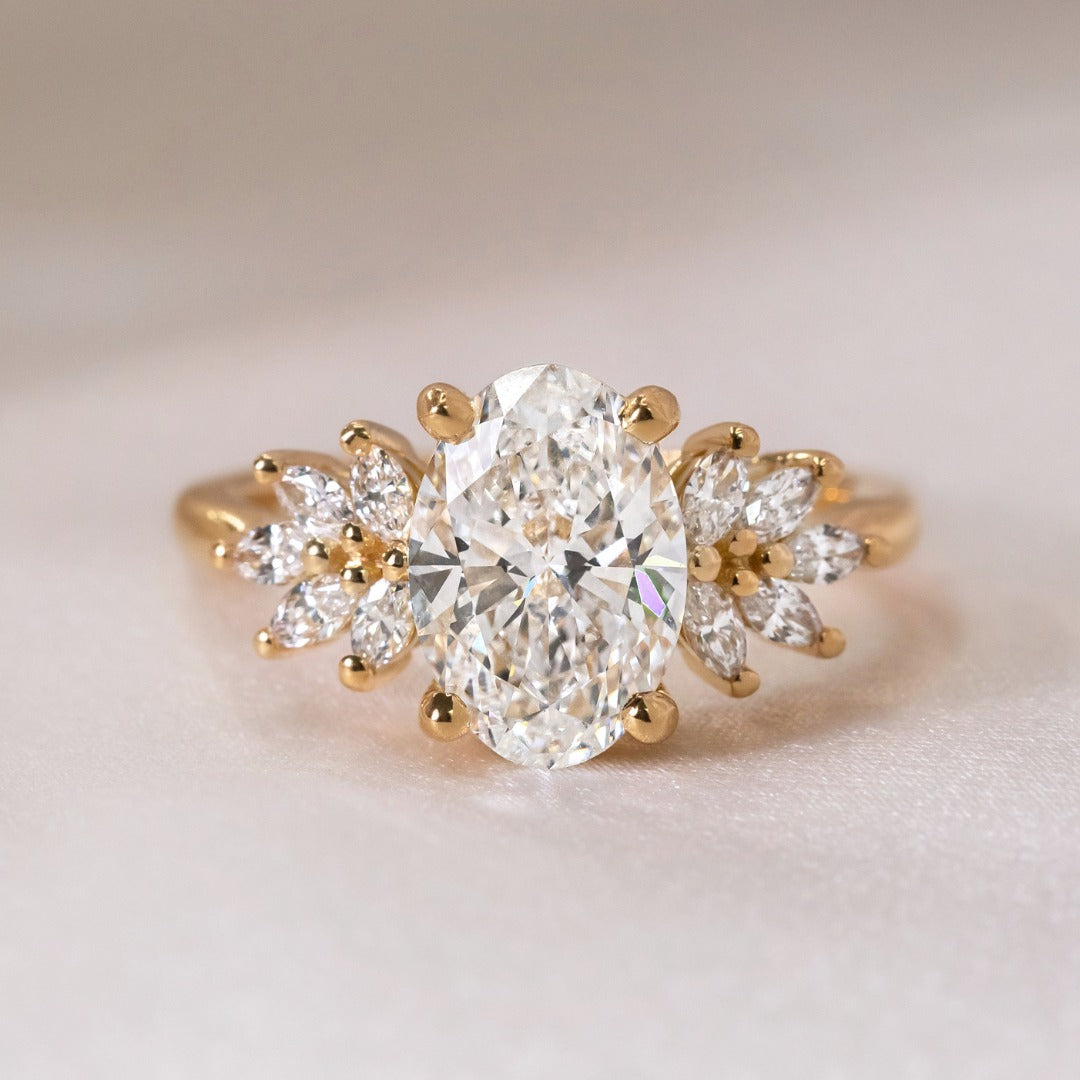
In recent years, lab-grown diamond engagement rings have become one of the most popular choices for couples who want a genuine diamond at a more affordable price. If you’re wondering how much a lab-grown diamond engagement ring costs and what influences its price, this guide will explain everything you need to know.
What is the Price of a Lab-Grown Diamond Engagement Ring?
The price of a lab-grown diamond engagement ring can vary considerably depending on:
* Diamond Carat
* Diamond Color
* Diamond Clarity
* Cut Quality
* Metal Type
* Intricacy of Design
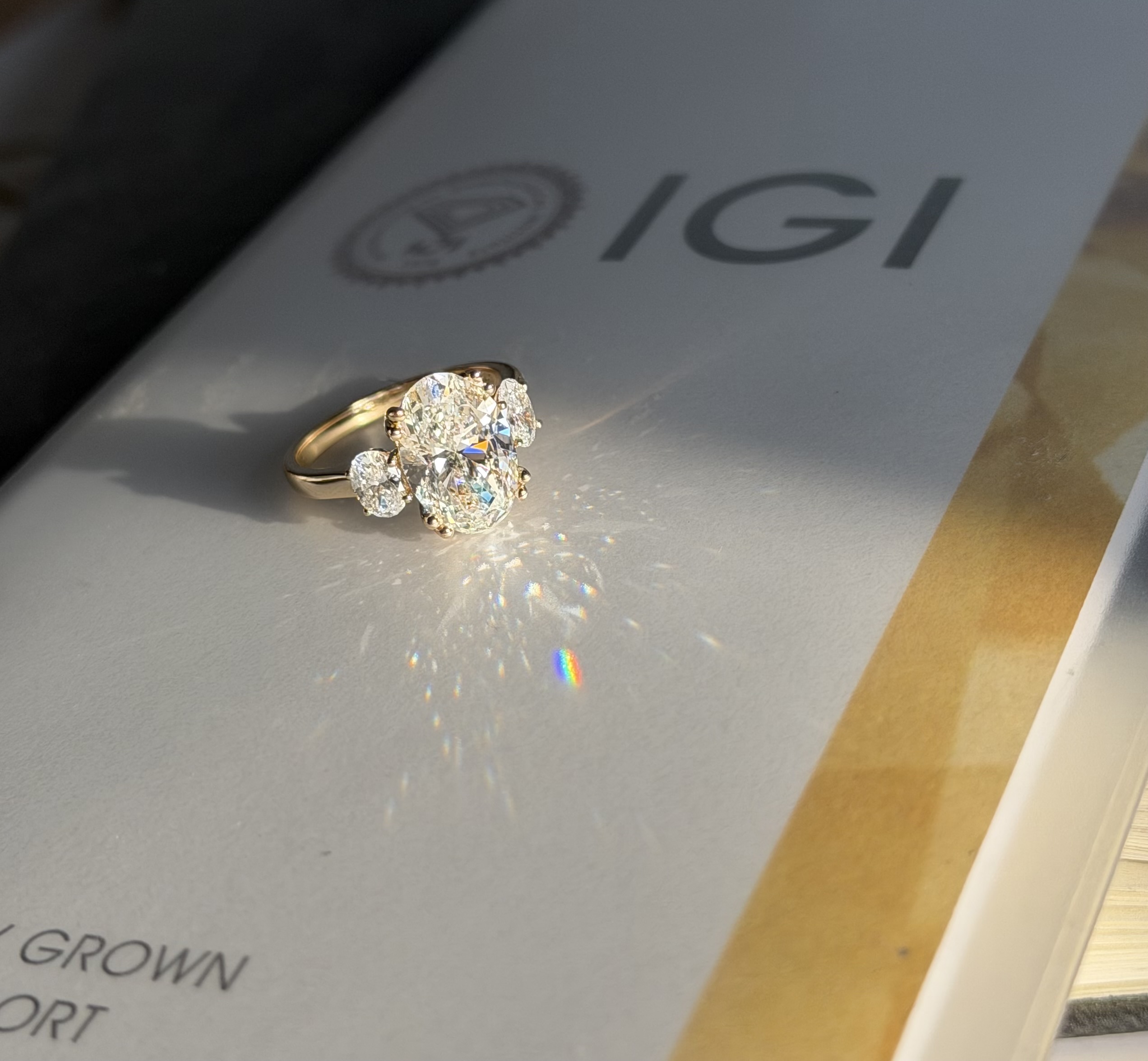
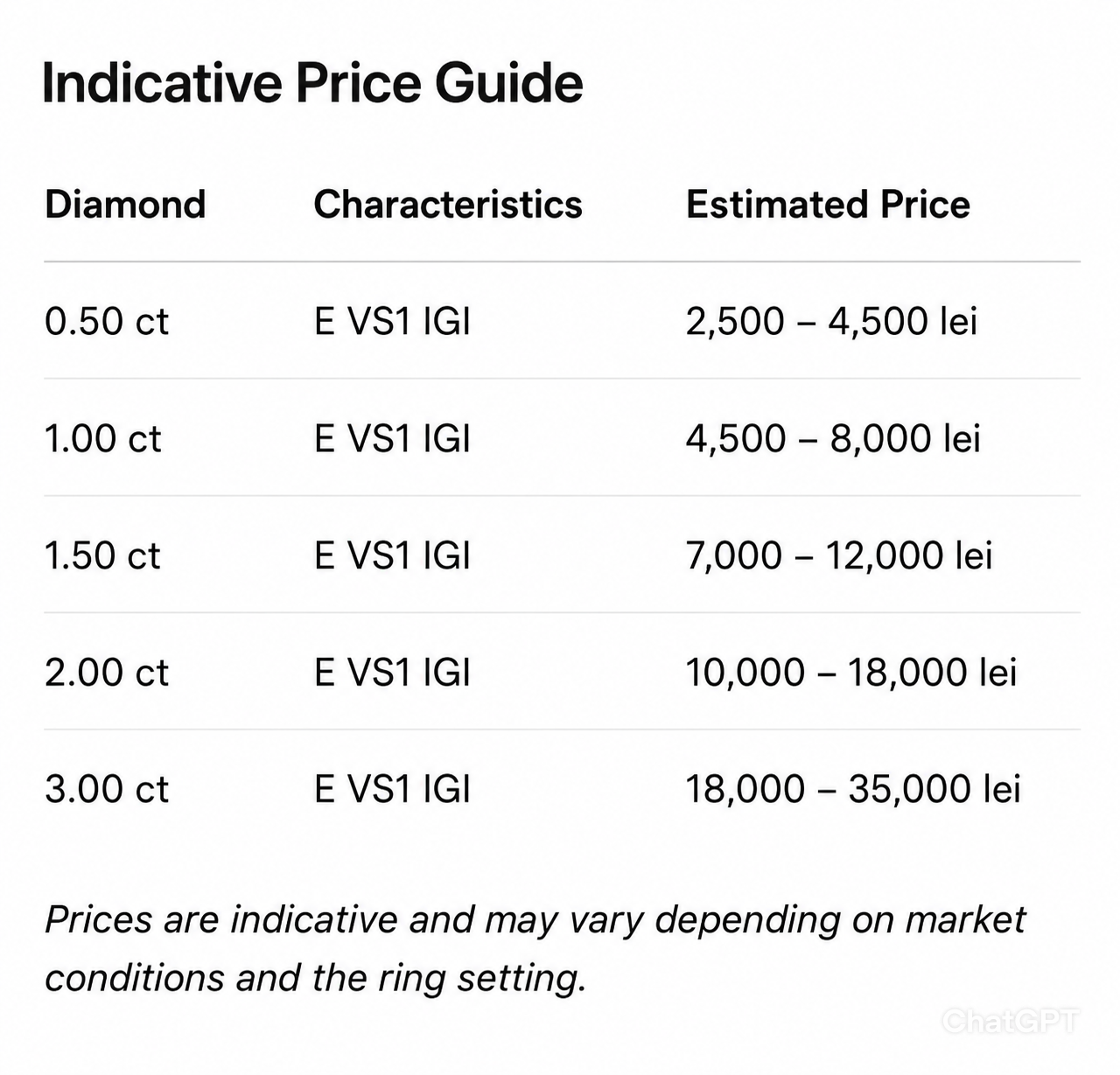
In general, an IGI Certified lab-grown diamond engagement ring can cost between $2,000 and $20,000+, depending on the features.
What influences the price of a lab-grown diamond?
1. Carat
Carat represents the weight of the diamond and is one of the most important factors in determining the price.
As the carat increases, the price does not increase linearly, but exponentially.
For example:
* 1 ct diamond = reference price
* 2 ct diamond = does not cost twice as much, but can cost three or four times as much
Diamonds of 1-2 carats are the most sought after for engagement rings.
⸻
2. Diamond color
Color is classified on an international scale from D to Z.
The most valued diamonds are:
* D – completely colorless
* E – almost perfectly colorless
* F – excellent colorless
At Estera Jewellery, most lab-grown diamonds are selected in colors E and F to provide an excellent balance between beauty and value.
⸻
3. Diamond Clarity
Clarity measures internal inclusions and external imperfections.
The most popular grades are:
* VS1
* VS2
* VVS2
* VVS1
A VS1 diamond usually offers an excellent value for money.
4. Diamond Cut
The cut is the factor that most influences brilliance.
Popular shapes in 2026 include:
* Oval
* Radiant
* Emerald
* Marquise
* Pear
* Round Brilliant
* Cushion
A great cut can make a diamond appear larger and more brilliant.
⸻
Lab-Grown Diamond vs. Natural Diamond
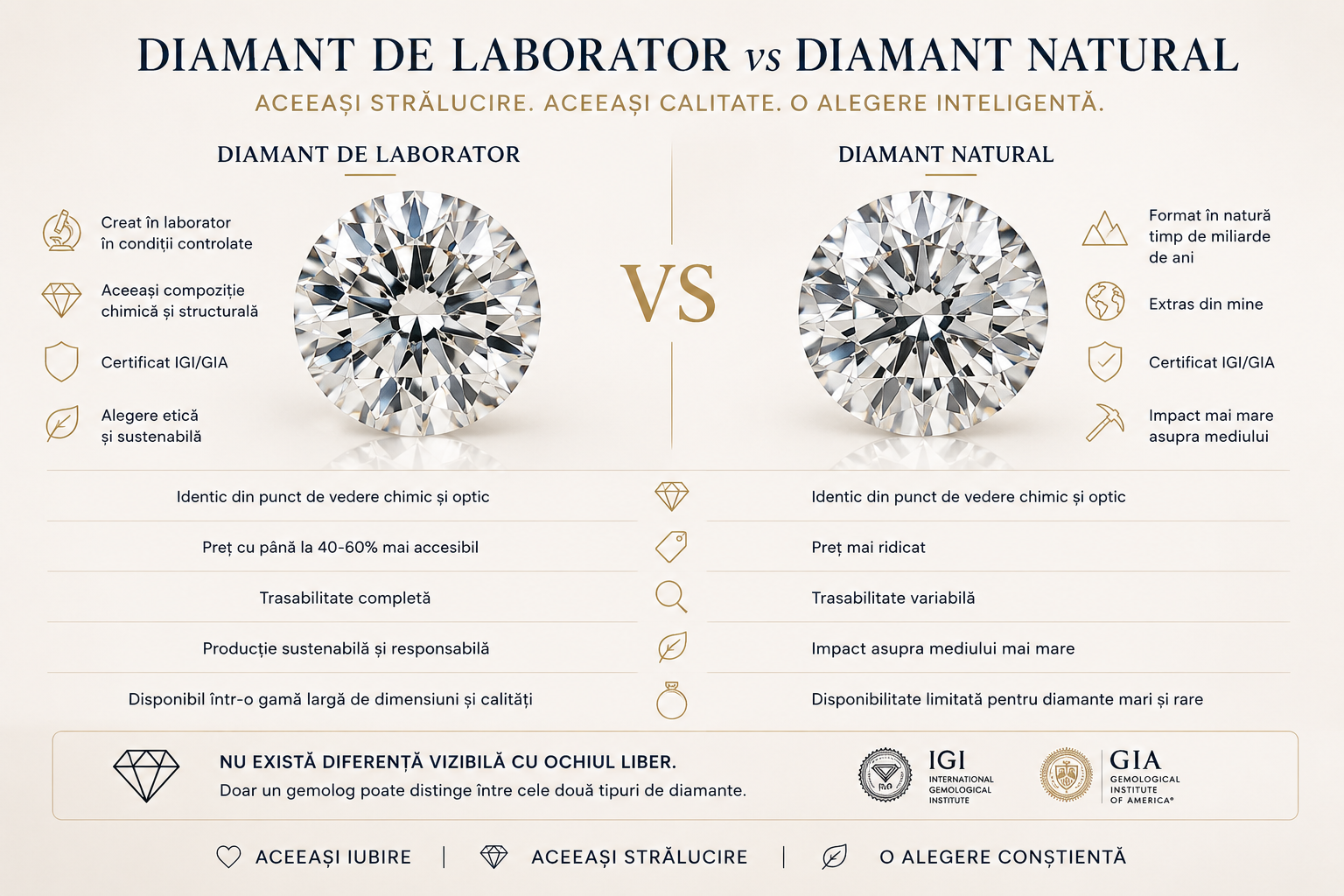
Many buyers wonder if there are any visible differences.
The reality is that:
✔️ They have the same chemical composition
✔️ They have the same hardness (10 on the Mohs scale)
✔️ They have the same brilliance
✔️ They can be IGI certified
✔️ They can be identified as genuine diamonds by professional instruments
The only difference is the origin.
Lab-Grown Diamonds are created in controlled environments using advanced technology.
⸻
Why are Lab-Grown Diamonds More Affordable?
The costs of mining are extremely high.
In the case of lab-grown diamonds:
* There is no mining
* There are no huge logistics costs
* Production is more efficient
This allows for obtaining diamonds of exceptional quality at significantly lower prices.
In many cases, a lab-grown diamond can cost 50-80% less than a natural diamond with similar characteristics.
⸻
Is the IGI certificate important?
Yes.
When buying a lab-grown diamond, certification is essential.
The most well-known lab for lab-grown diamonds is:
* IGI (International Gemological Institute)
An IGI certificate includes:
* Carat
* Color
* Clarity
* Cut
* Symmetry
* Fluorescence
* Unique identification number
This certificate provides transparency and security to the buyer.
⸻
Which diamond shape offers the best value?
If you want your diamond to look as big as possible for your budget, elongated shapes are great.
The most popular are:
- Oval: Creates the illusion of a larger diamond and visually lengthens the finger.
- Marquise: One of the shapes with the largest visible surface area per carat.
- Pear: Elegant and very feminine.
- Radiant: The perfect combination of brilliance and a modern look.
How do you choose the best lab-grown diamond engagement ring?
Instead of just going for carat weight, try to find a balance between:
* Carat weight
* Color
* Clarity
* Design
A 1.50 ct E VS1 diamond can look spectacular and offer better value than a larger diamond with lower specifications.
⸻
Engagement ring trends in 2026
The most sought-after styles are:
* Oval diamond solitaire rings
* Marquise diamond rings
* Hidden halo radiant rings
* Nature-inspired vintage rings
* Emerald diamond rings
* Toi et moi rings
* Cigar band rings
⸻
Why choose a lab-grown diamond engagement ring?
✔️ Genuine Diamond
✔️ IGI Certified
✔️ More Affordable
✔️ Exceptional Sparkle
✔️ Higher Carat Options
✔️ Full Customization
✔️ Available in White Gold, Yellow Gold, Rose Gold, or Platinum
⸻
Bottom Line
A lab-grown diamond engagement ring is one of the smartest choices for modern couples. It offers the beauty and durability of a genuine diamond, but at a significantly lower cost.
If you want an IGI certified diamond with exceptional sparkle and full customization, a lab-grown diamond can offer a price-performance ratio that’s hard to beat.